*Memory Matrix
Writings, notes, and data
Pages
Categories
- America Notes (1)
- Book notes (5)
- Computing Notes (58)
- Errata Notes (2)
- Gameshow Notes (6)
- Gaming Note (3)
- Garden Notes (1)
- History notes (4)
- Literature Notes (2)
- Social Science notes (11)
- Spiritual Note (1)
- Spiritual notes (15)
- Tech (1)
- Uncategorized (4)
Blogroll
- <toby> Mackenzie's site
- A Common IT Man's Blog
- a3nm's blog
- Alexander Zeitler
- American Thinker
- Anant Shrivastava
- Barter Is Evil
- Card Catalog
- Chris Meller
- Chronicles Magazine
- Consumer Rights Wiki
- Curmudgucation
- Debunking Skeptics
- Elijan Mastnak
- Fireborn
- Global Geopolitics
- Gwern Branwen
- Issues & Insights
- Joe Wingbermuehle
- Julia Evans
- Kailash Nadh
- Laidback Gardener
- Las Ultimas Noticias
- Laura Aboli channel
- Lew Rockwell
- Matt Mahoney's Home Page
- Menno Simons.net
- Michael Eriksson
- Natural News
- Neocities
- Norman Geisler
- Pavel Rojtberg
- Piekniewski's blog
- Prophecy Update
- Psuedo Singleton / Justin
- Ray Peat
- Reminiscence of the Future
- Richard Brath
- Schneier on Security
- Simon Says
- Straight Line Logic
- The Cyanide Hole
- The Divinely Inspired Scriptures
- The Last Refuge
- The Occidental Observer
- The Prophecy of Jacob and Esau
- The Skeptical Doctor
- The Somnolescent Archives
- The Text of the Gospels
- The Toll
- Turbulent Times
- Unveiling the Apocalypse: Prophecy in Catholic Tradition
- What is Truth?
Books
- A Defence of the True Church Called Quaker (John Cook, 1659)
- Brenton Septuagint Translation
- English Revised Version (1885)
- Geneva 1590 (without Apocrypha)
- Holy Bible – Geneva 1579
- King James' Version
- Patriarchal Text (1904)
- The Holy Bible translated by Robert Young (1863)
- Westminster Leningrad Codex (HTML)
- Westminster Leningrad Codex (PDF)
Data
Gaming - Ark
Gaming - Minecraft
News
Tools
- Ahuka Communications
- AWMACH Bible Library
- Baidu (Boolean Search capability!)
- Bible Research
- Biblical Studies Commons
- Bob is the Oil Guy Forums
- D3 Examples
- D3.js
- D3.js Graph Gallery
- Debian Handbook
- DeskDr.com
- DEV Community
- Dissertations from Andrews U.
- Dot Net Perls
- EWG's Food Scores
- Fallacies
- Filmot
- Greek Word Study Tool
- Hugging Face
- Introduction to Logic
- Level 1 Techs Forums
- Linux Reviews
- Logical Fallacies
- Marginalia (old address)
- Marginalia Search
- Mechanical Translation Project
- medRxiv
- Mojeek
- NetworksDB IP Intelligence
- Online Etymology Dictionary
- Open Culture
- OpenScriptures Hebrew Bible
- Post.Bytes
- Start Page
- Tanach.us (Revision of WLC)
- Windows Tip of the Day
- Word Reference
- Zeitgeist Reviews
- Zettelkasten Forum
- Zettelkasten Method
Web 1.0
Tags
- 2148
- 7Zip
- AI
- Aider
- AlmaLinux
- Alphabet
- Amos
- Anthropic
- apologetics
- AppImage
- Apple
- apt
- arbitration
- archiving
- Backup
- Baptist
- Bash
- Batch
- Bible
- Books
- bookworm
- bullseye
- California
- castle
- Caution
- CentOS
- Changelog
- children
- Chromium
- Claude
- color
- Colorado
- commentary
- copyright
- counties
- Cron
- database
- Debian
- Department of Energy
- Devuan
- digital ID
- digital sovereignty
- discrimination
- economics
- egregore
- ERV
- Extensions
- Fedora
- filter bubble
- Firefox
- floccus
- Ford
- freedom
- futurism
- garden
- Genesis
- genetics
- Geneva
- gentiles
- Georgia
- Ghostscript
- GM
- GPL
- Greek
- Grub
- GTK
- Health
- Hebrew
- history
- HP
- HPLIP
- Hydrogen
- hypocrisy
- hypothesis
- Hyundai
- IceWM
- iftop
- Illinois
- iptraf
- Java
- Jeremiah
- Jeremias
- Joplin
- Kafka
- Kentucky
- king
- KJV
- Labor
- language
- Leningrad
- Library
- LibreWolf
- Linux
- Logseq
- Luke
- LXQT
- majority text
- MariaDB
- markdown
- marketing
- Massachusetts
- Matthew
- Michigan
- Microsoft
- Minecraft
- Mistral
- Mojeek
- Montana
- Mozilla
- MySQL
- Nano
- networking
- New Jersey
- Nextcloud
- Nikola
- North Carolina
- North Dakota
- notes
- ntp
- Obsidian
- Ollama
- open source
- Oracle Linux
- Organization
- paired comparision
- Partitions
- php
- Picom
- preterism
- Price's law
- privacy
- programming
- prophecy
- Python
- python 2208
- python 2220
- python 2240
- python 2248
- python 2251
- python 2256
- QOwnNote
- QPDF
- R
- RAID
- rstudio
- r^2
- SELinux
- serfdom
- sharecropping
- SSH
- Stata
- Stephanus
- swap
- systemd
- Tennessee
- test3
- testing
- textus receptus
- Thunderbird
- time series analysis
- Tischendorf
- treasuries
- tree
- Trilium
- uMatrix
- Vermont
- VirtualBox
- Virtualization
- Vivaldi
- Volvo
- Westcott & Hort
- Windows
- wisdom
- WordPress
- WSL
- X11
- XFCE
- yacy
- z240302wa
- z260205wa
- z260518wa
- z260518wb
- z260519wa
- z260521wa
- z260525wa
- z260625wa
- z260625wb
- Zen Burn
- Zettelkästen
- Zettlr
- Zotero
- ἔθνεσιν
- ἔθνος
- θεός
- ΙΕΡΕΜΙΑΣ
test3
test3
This has some code
That I thought I was cool
But it really wasn’t so then I called him a stinking ugly mule, but that wasn’t the half of it.
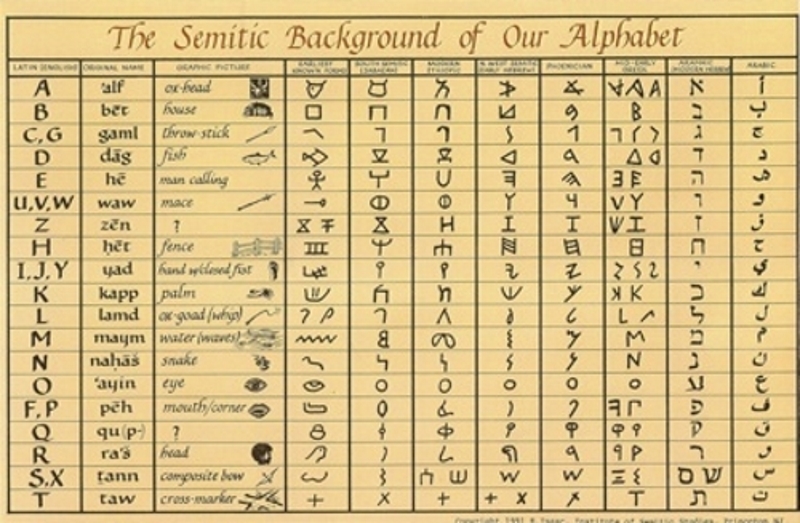
2256
This is inline coding in a line.
2251 with image upload
Now for some more tests
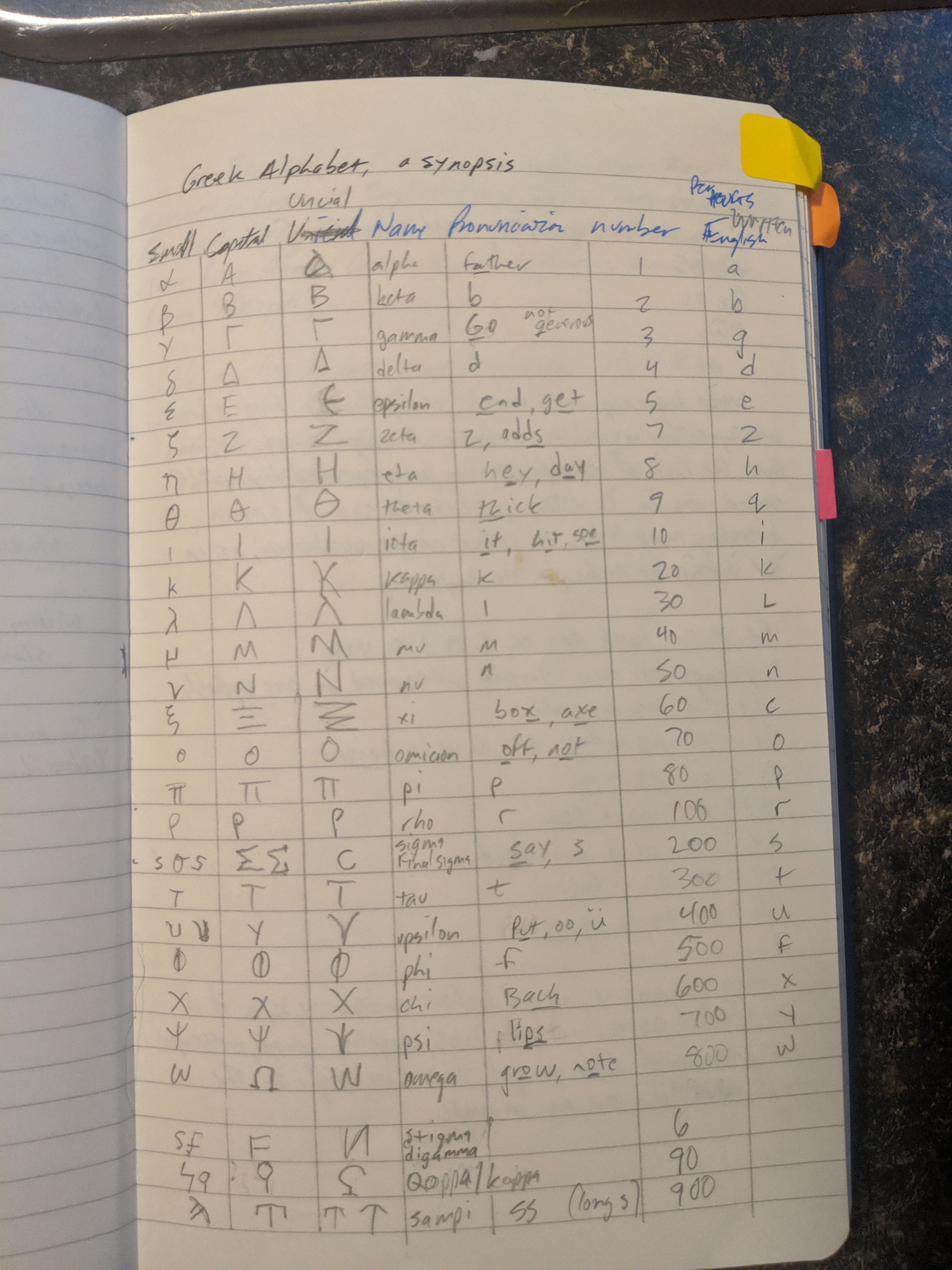
Does it work?
2248 test
Testing
<img src=”http://192.168.0.198/wp-content/uploads/2026/07/Alphabet-800×523.jpg” alt=”Alphabet-800×523.jpg” class=”aligncenter” />
Some more testing
<img src=”http://192.168.0.198/wp-content/uploads/2026/07/Greek-numerals.png” alt=”Greek numerals.png” class=”aligncenter” />

2148 test
21 48 test
The Digital ID Prison: The Authentication Layer
Joshua Stylman’s essay on refusing to give the digital identification is a great read and definitely worth sharing.
The system requires your participation to work. The catch is that this may also be its biggest weakness. It only becomes a cage when adoption is near-universal. In other words, when opting out means you can’t participate in daily life. When cash still works, and analog alternatives survive, resistance may be inconvenient but still livable. That’s why they need you to volunteer.
Don’t give it.
The Digital ID Prison
Discernment regarding the technology choices that one makes continues to remain important. In many cases, doing away with social media entirely is the best choice. Freedom and knowledge for posterity is given up bit by bit.
The infrastructure for systems in which you “cannot buy or sell without an ID” is being assembled one prompted selfie at a time by Meta, Uber, banks, app developers, and verification vendors. This often happens before governments even pass the final laws.
via Private Biometrics Are Building the Digital ID Prison: No New Laws Required. – The Burning Platform.
A conflict in KJV v. RV as Regards Virtue
Upon checking for the word childish using grep on the server I stumbled upon a drastic difference in translation meanings.
Wisdom, Chapter 4 in the KJV, says “Better it is to have no children, and to have virtue: for the memorial thereof is immortal: because it is known with God, and with men. ”
Whereas in the Revised Version, Wisdom says ” Better than this is childishness with virtue; For in the memory of virtue is immortality: Because it is recognised both before God and before men.”
These are very different meanings. In the authorized version, one finds a comfort for having virtue if they lacked children. In the Revised Version they find an admonishment toward playfullness. Stepping further backward to chapter three, we find that the discussion relates to the unfortunate children of adultery. Chapter 3 of the book Wisdom always gave me great discomfort. It seems the KJV implies that one is better to not have children and to possess virtue rather than to have unrighteous children via adultery. The RV implies either that children should be virtous, or that a virtous person ought to remain in touch with their inner child.
The Geneva Bible agrees with the KJV by using the word barreness. “Better is barrenness with virtue: for the memorial therof is immortal: for it is know with God & with men”
I was looking up the world childish to see how many references there might be to it in addition to the one in 1 Corinithians 13, which says “When I was a child, I spake as a child, I understood as a child, I thought as a child: but when I became a man, I put away childish things.”
There are two instances of the word childish in the KJV. The RV shows only one since they used childishness in Wisdom chapter 4.
Check the source text
One problem that a person studying the Bible will encounter rears its ugly head in this example. That is the false word. In this case, the word is gentiles. The screenshot below of a website shows a Greek text and an English text of Amos 9:12. The English text presented uses the word gentiles. The Greek word highlighted on the right is ἔθνος. The word means something like a province, tribe, class of men, caste, trade association, guild, or race. The key component being that is an aggregate body. The plural of it would then be something like nations or peoples. E.g. the peoples of the Levant, or the nations of the Orient. It refers to flocks of bees, flies, and birds.
The word gentiles is a Latin word that become an egregore.
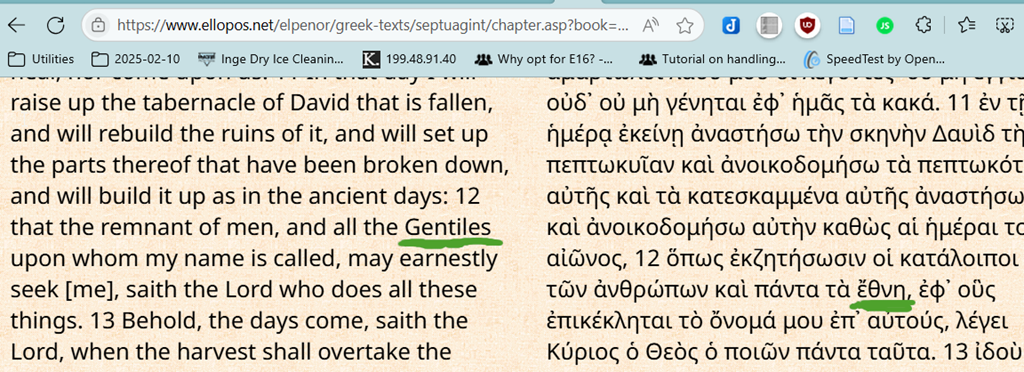
Figure a [1]
The following example (emphasis mine) shows another difference where ethnos does not mean others in a binary ideological sense of the ideologue’s self and the abstracted other. It means preached unto the tribes, nations, or groups of people. The following is from 1st Timothy, Chapter 3.
And without controversy great is the mystery of godliness: God was manifest in the flesh, justified in the Spirit, seen of angels, preached unto the Gentiles, believed on in the world, received up into glory.
καὶ ὁμολογουμένως μέγα ἐστὶ τὸ τῆς εὐσεβείας μυστήριον· Θεὸς ἐφανερώθη ἐν σαρκί, ἐδικαιώθη ἐν Πνεύματι, ὤφθη ἀγγέλοις, ἐκηρύχθη ἐν ἔθνεσιν, ἐπιστεύθη ἐν κόσμῳ, ἀνελήφθη ἐν δόξῃ. [2]
The thought form that develops from the cultic use implies that Jesus was preached to a solitary outgroup as opposed to a ideology based ingroup. It posits the existence of two groups only when the meaning of the word covers multiple groups rather than an ideological binary. ἔθνος appears in the Wiktionary with a useful analysis.
The 1885 English Revised version uses the word nations.
And without controversy great is the mystery of godliness; He who was manifested in the flesh, justified in the spirit, seen of angels, preached among the nations, believed on in the world, received up in glory. [3]
This is from the Geneva Bible.
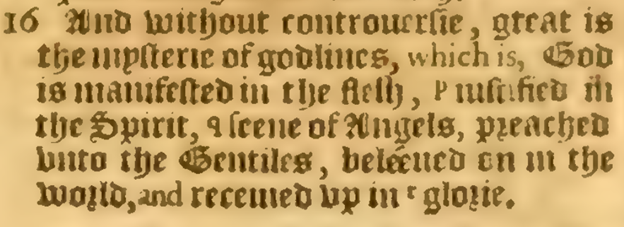
And without controuerfie , great is the myſterie of godlines. which is, God is manifetted in the flelly, tuttified in the Spirit, feene of Angels, preached unto the Gentiles, beleeued on in the Would, and receined up in glozie [4]
Young’s Literal Translation of 1863 renders the verse beautifully. While looking at the verse is notable to see the phrase "seen by messengers" as opposed to "seen by angels" which appears in many versions. Angels is another word that became an egregore but that is a topic for another memo.
and, confessedly, great is the mystery of godliness, God was manifested in flesh, declared righteous in spirit, seen by messengers, preached among nations, believed on in the world, taken up in glory. [5]
All of these versions add punction that is not present in the original scriptures. The original scriptures contain no commas and semi-colons. The Geneva Bible contains an incredible amount of commentary in the margin.
The Interlinear from George Ricker Berry, PH.D. includes many punctuation marks that do not appear on images of original manuscripts. They appear even in the Greek portion of his interlinear text. The following shows 1 Timothy, Chapter 3. The word the shows the placement in the later work where the same word appears in brackets to indicate the modern translator/scribe added it to the text. Three versions appear below. The top version is the one in the authorized version and the second is the English translation that appears under the words in Greek in this book.
And without controversy great is the mystery of godliness: God was manifest in the flesh, justified in the Spirit, seen of angels, preached unto the Gentiles, believed on in the world, received up into glory.
καὶ ὁμολογουμένως μέγα ἐστὶν τὸ τῆς εὐσεβείας μυστήριον θεός" ἐφανερώθη ἐν σαρκί, ἐδικαιώθη ἐν πνεύματι, ὤφθη ἀγγέλοις,. ἐκηρύχθη ἐν ἔθνεσιν, ἐπιστεύθη ἐν κόσμῳ, ἀνελήφθη ἐν δόξῃ.
And confessedly great is the of piety mystery god was manifested in flesh was justified in the spirit was seen by angels was proclaimed among the nations was believed on in the world was received up in glory [6]
The Oxford University Press’s version incorporating the Scrivener text of 1881 has the following on page 909.
ἑδραίωμα τῆς ἀληθείας καὶ ὁμολογουμένως μέγα ἐστὶ τὸ τῆς εὐσεβείας μυστήριον ὃς ἐφανερώθη ἐν σαρκί ἐδικαιώθη ἐν πνεύματι ὤφθη ἀγγελοις ἐκηρύχθη ἐν ἔθνεσιν ἐπιστεύθη ἐν κόσμῳ ἀνελήφθη ἐν δόξῃ [7]
And without controversy great is the mystery of godliness; He who was manifested in the flesh, justified in the spirit, seen of angels, preached among the nations, believed on in the world, received up in glory. [3]
And without controversy great is the mystery of godliness: God was manifest in the flesh, justified in the Spirit, seen of angels, preached unto the Gentiles, believed on in the world, received up into glory. [8]
1 I Saw the Lord Standing on the Altar: And He Said, Smite the Mercy-Seat, and … AMOS / ΑΜΩΣ9 – Bilingual Septuagint.” Accessed July 6, 2025. https://www.ellopos.net/elpenor/greek-texts/septuagint/chapter.asp?book=32&page=9.
2. "Ch 3 – To Timothy 1 – The New Testament.” Accessed July 12, 2025. https://www.ellopos.net/elpenor/greek-texts/new-testament/timothy_1/3.asp.
3. “Revised Version with Apocrypha (1895) 1 Timothy 3.” Accessed July 12, 2025. http://memorymatrix.cloud/rv/1TI03.htm.
4. http://memorymatrix.cloud/wp-content/uploads/2024/10/Holy-Bible-Geneva-Bible-1579.pdf#page=1181
7. The_New_Testament_of_Our_Lord_and_Saviour-Oxford-University-Press-1896.pdf#page=909
The king as god in the KJV
A discrepancy appears in the King James’ Version and other Masoretic Text bibles relative to the Septuagint version in the book of Jeremiah (ΙΕΡΕΜΙΑΣ). The Masoretic Text derived bibles equate the king with the deity. The term LORD of hosts supposedly represents a place in the original language texts where the divine name appears. That may not always be the case. There is a popular online Bible translation which lists the papyrus from which it derives each translation. One can check the papyrus for the divine name in places where that translation says LORD and there is no instance of the divine name on the original document. For this particular instance, the difference appears in these three quotations.
1885 RV: Moab is laid waste, and they are gone up into her cities; and his chosen young men are gone down to the slaughter, saith the King, whose name is the LORD of hosts. [1]
The King James’ Version is similar to the English Revised Version.
KJV: Moab is spoiled, and gone up out of her cities, and his chosen young men are gone down to the slaughter, saith the King, whose name is the LORD of hosts. [2]
The Septuagint version does not equate the king with the deity.
LXX: 16. Moab is ruined, even his city, and his choice young men have gone down to slaughter. 16 The day of Moab is near at hand, and his iniquity moves swiftly to vengeance.[3]
This question particularly interests me. Perhaps twenty years or more ago, an exposition on the subject of the old testament included someone explaining that old testament religion was an abstraction of the king, and essentially a form of worshipping the king as a military commander. That description really inspired me to research and study more.
Amos 4:13 negates the concept of a king occupying the conceptual space of the deity as does the three angels’ message in the book of Revelation.
1. Revised Version with Apocrypha (1895) Jeremiah 48
2. King James Version + Apocrypha Jeremiah 48
3. Brenton Septuagint Translation Jeremias 31
The Non Literal Baptists
Michael Licona, Associate Professor of Theology at Houston Baptist University, published a shocking view from his book, The Resurrection of Jesus: A New Historiographical Approach. He claims that the passage in Matt. 27:52-53 describing the raised saints coming out of their graves is apocalyptic imagery injected into the narrative and not a literal assertion of fact. He discussed this view during a round table published by the Southeastern Theological Review [1]:
As I broadened my reading in the Greco-Roman and Jewish literature of the period, I began to observe numerous reports containing phenomena similar to what we find reported by Matthew at Jesus’ death. The frequent mention of darkness, apparitions of the dead, the earth shaking, and celestial phenomena peaked my interest. I wondered whether these things reported by Virgil, Dio Cassius, and Josephus were all intended to be understood as events that had occurred in space-time. Or were they an ancient literary device—“special effects”—meant to ac-centuate an event of cosmic, even divine significance?2 So, it appears that this ancient practice continues in some locations to this day.
Then I observed similar phenomena in Acts 2 when Peter ad-dressed the crowd, saying the speaking in tongues they were witnessing was in fulfillment of Joel 2. He goes on to list other phenomena men-tioned by Joel, including wonders in the sky involving the sun going dark, the moon turning to blood, and signs on the earth such as blood, fire, and smoke. Joel concludes by saying that in that day everyone who calls on the name of the Lord will be saved. Peter then testifies how Jesus performed wonders and signs while among them. He rose from the dead and now they should call upon His name for salvation. Similar phenom-enal language appears in Jesus’ Olivet Discourse in Matthew 24 where the sun and moon will go dark and the stars will fall out of the sky. Many evangelical scholars interpret the celestial phenomena in Acts 2 and Matthew 24 as apocalyptic symbols with no corresponding literal events involving those celestial bodies. I became persuaded that the raised saints in Matthew 27 belonged to the same genre.
